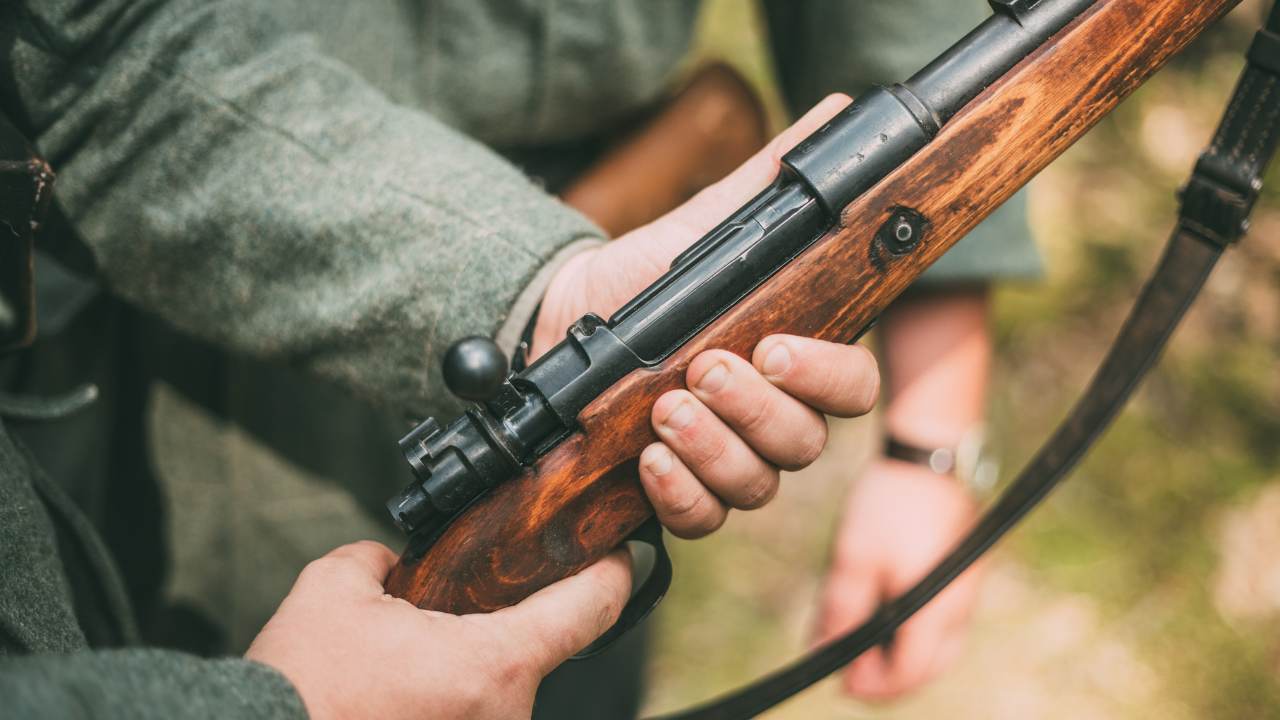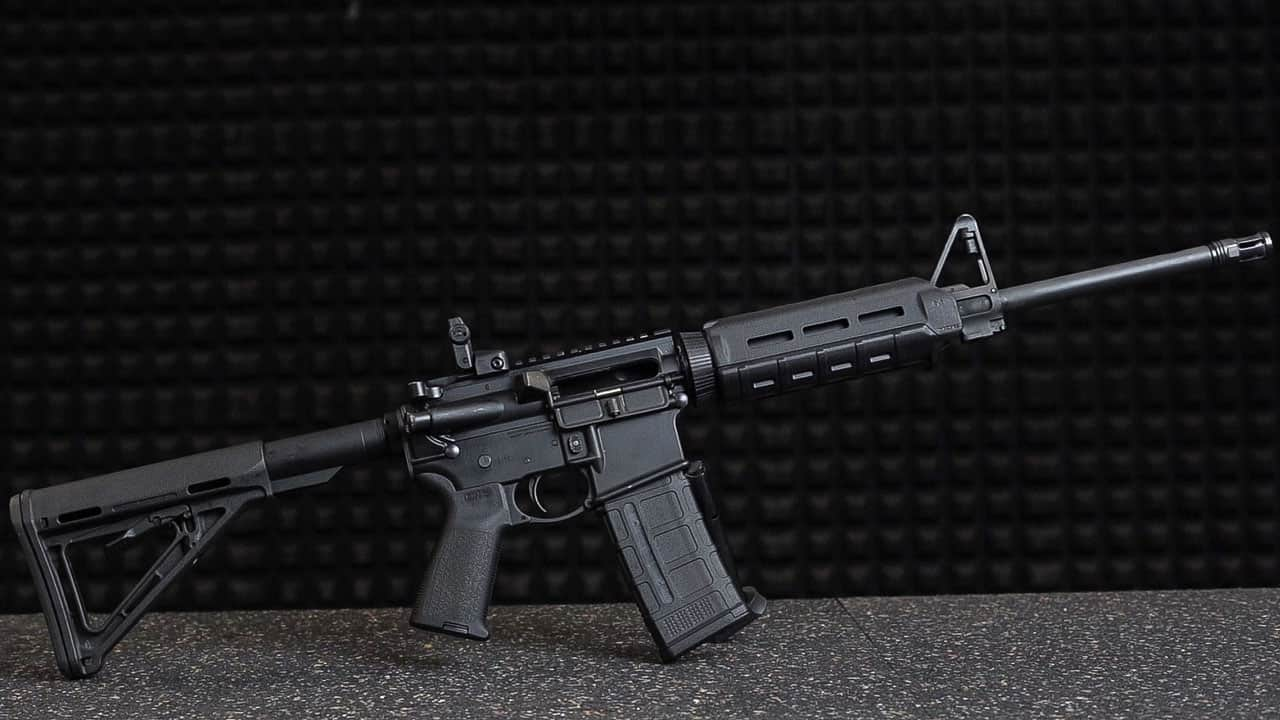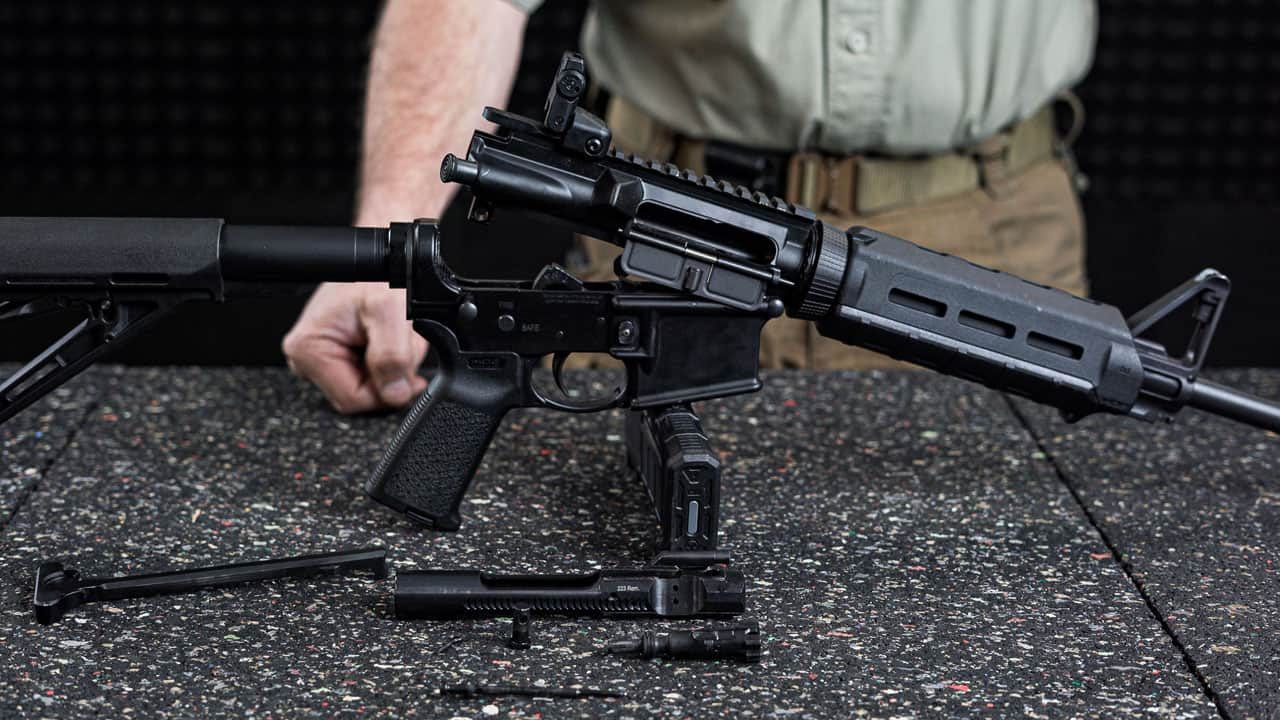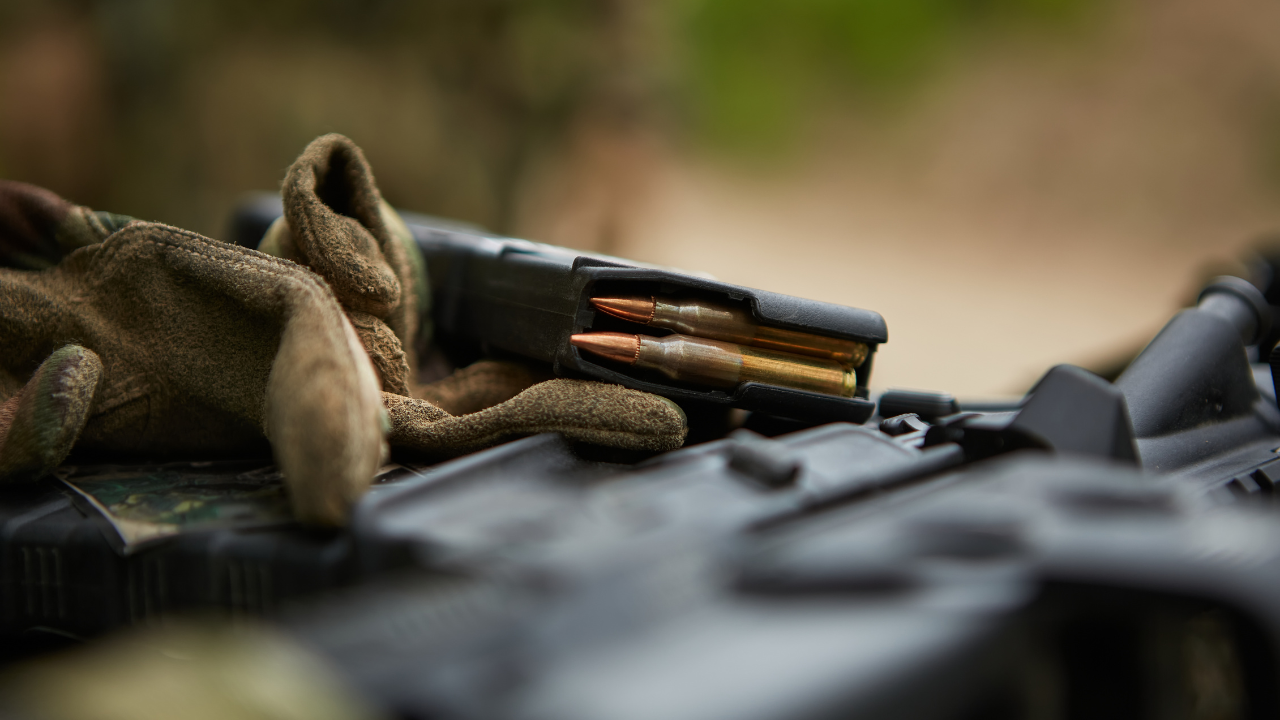
The 5.56×45 mm NATO cartridge became the standard rifle ammunition for the North Atlantic Treaty Organization (NATO) in 1980. However, even at the time of its introduction, there were opinions that its relatively small caliber might not be sufficient for certain types of missions. Calls for more powerful ammunition for assault rifles, especially from special forces, led to the development of the .300 AAC Blackout (7.62×35 mm).
Overcoming obstacles
Experiments took many years and initially did not provide a satisfactory replacement. Negative lobbying by firearm manufacturers, reluctant to invest in new machinery and change procedures, also played a role. The cartridge was primarily intended for AR-15/M4/M16 assault rifles, which are produced worldwide. Representatives of various armies were also hesitant to replace their mass-issued and costly weapons with a recalibrated model.
In 2009, the American company Advanced Armament Corporation (AAC) took the initiative, collaborating with Remington Defense. The developers aimed to create a cartridge that would rival the 7.62×39 mm ammunition known from the AK-47 or Sa vz. 58. While inspired by the Russian counterpart, the .300 AAC Blackout featured improved performance with a fundamentally different shape. Russian ammunition uses a bottle-necked cartridge, responsible for the distinctive curved magazine design. Attempts in the past to adapt and modify the AR-15 for the 7.62 mm caliber faced chronic unreliability issues.
Two modern cartridges created in the USA between 2002 and 2004, 6.5mm Grendel and 6.8 Remington SPC, also proved to be partially dead ends. While satisfying special unit testers, compatibility issues persisted. Adapting an AR-15 to these calibers required changing the barrel, bolt, and its carrier, as well as the return spring. Although the standard M4/M16 magazine could be used, the larger dimensions of the new ammunition allowed only a limited number of rounds.
Just change the barrel
The AAC team had to solve two main challenges: achieving maximum effectiveness on the target with minimal intervention in the rifle. They came up with a brilliantly simple idea: embed a .308 caliber projectile into the 5.56×45 mm NATO cartridge case. Inspired by the low-production .300 Whisper cartridge, which originated from a similar concept but was primarily designed for single-shot weapons, AAC's chief developer Robert Silvers took over the overall concept. After having engineers calculate dimensions and quantities, the resulting .300 AAC Blackout passed SAAMI (Sporting Arms and Ammunition Manufacturers' Institute) standards after ballistic testing in January 2011.
The resulting cartridge meets all the requirements of American special forces. Due to the same cartridge case as the 5.56×45 mm NATO, standard magazines can be used, accommodating a full 30 rounds. An enormous advantage is that the blackout can be fired from almost any AR-15 variant. The only necessary modification involves changing the barrel; everything else can remain unchanged. The ballistic properties of .300 BLK resemble the Russian pattern and provide better accuracy up to 300 m and reduced recoil. The basic version is subsonic and can be used with a suppressor.
Defending home
American ammunition is available for the commercial market, and preppers worldwide quickly realized they had found the Holy Grail. AR-15 rifles in .223 Remington caliber are particularly popular among them. In case of a crisis, they represent an ideal firearm: reliable, durable, easy to maintain, and with widely available parts. .223 Rem ammunition can be found in any gun store, and in countries with a larger shooting community, it is available from almost anyone.
Despite these advantages, some owners of „black rifles“ share similar concerns to some soldiers. They contemplate whether 5.56mm rounds are powerful enough to immediately stop a furious aggressor. Despite its „micro-caliber,“ this ammunition has a stronger effect on tissue than many expect, thanks to the loss of stability upon contact with the target and significant bullet fragmentation. However, the Russian 7.62×39 mm cartridge can boast a higher stopping power due to its long projectile, which immediately destabilizes after impact, sometimes passing through the tissue sideways, resulting in a very wide wound.
.300 AAC Blackout competently rivals this aspect, and the projectile's high mass provides good penetration. Although only at shorter distances, this is precisely what you need for defending your home: stopping an intruder forcefully entering your house or property from a few (dozens of) meters away. Combined with an AR-15, .300 BLK represents an ideal prepper variant. All you need is one rifle at home, two barrels, and a sufficient supply of ammunition for both calibers. With standard .223 Rem cartridges, you can practice at the shooting range, while the more powerful blackouts will be waiting for uninvited guests in the firearm's magazine stored in the safe.
Pros and cons
Most contributors on discussion forums agree with positive assessments. When a newcomer asks what makes .300 AAC Blackout so fantastic, they usually get a convincing answer: „Easy to use, easy to reload, great ballistics, and stopping power up to 250 m. How could you not love it?“
However, we must not forget about the disadvantages. While BLK is generally available, it is produced noticeably less than .223 Rem. In times of crisis, it may become scarce more quickly. Higher performance also comes with a higher price, up to twice that of .223 Rem. Both types are suitable for sporting activities, but in the 5.56 mm caliber, you will find significantly more specialized loads for target shooting.
In terms of shooting parameters, a smaller caliber projectile follows a flatter trajectory, making it more challenging for beginners to hit the target with .300 AAC Blackout compared to .223 Rem. A more massive recoil will have a similar impact. Close Quarters Battle (CQB) experts add that the 5.56 mm cartridge is safer for use in buildings—its projectile is designed to shatter upon impact.
If you expect an apocalypse and plan to pack blackouts into your evacuation backpack, be aware that the same quantity will weigh about 40% more than subtler siblings. However, during hunting, they will reward you with a significantly higher chance of bagging game. They can utilize their full potential even with a compact weapon with a nine-inch barrel, allowing you to take down deer or wild boar effectively. This is an important bonus for emergency situations where other sources of food may run out.